He is five months away from completing his first term. Gone are the losses and the company’s high debt; now they aim to “have the financial flexibility to evaluate any growth opportunities,” he emphasizes. Aware that changes in shareholding will impact the new board, he looks optimistically at the current situation and the future.
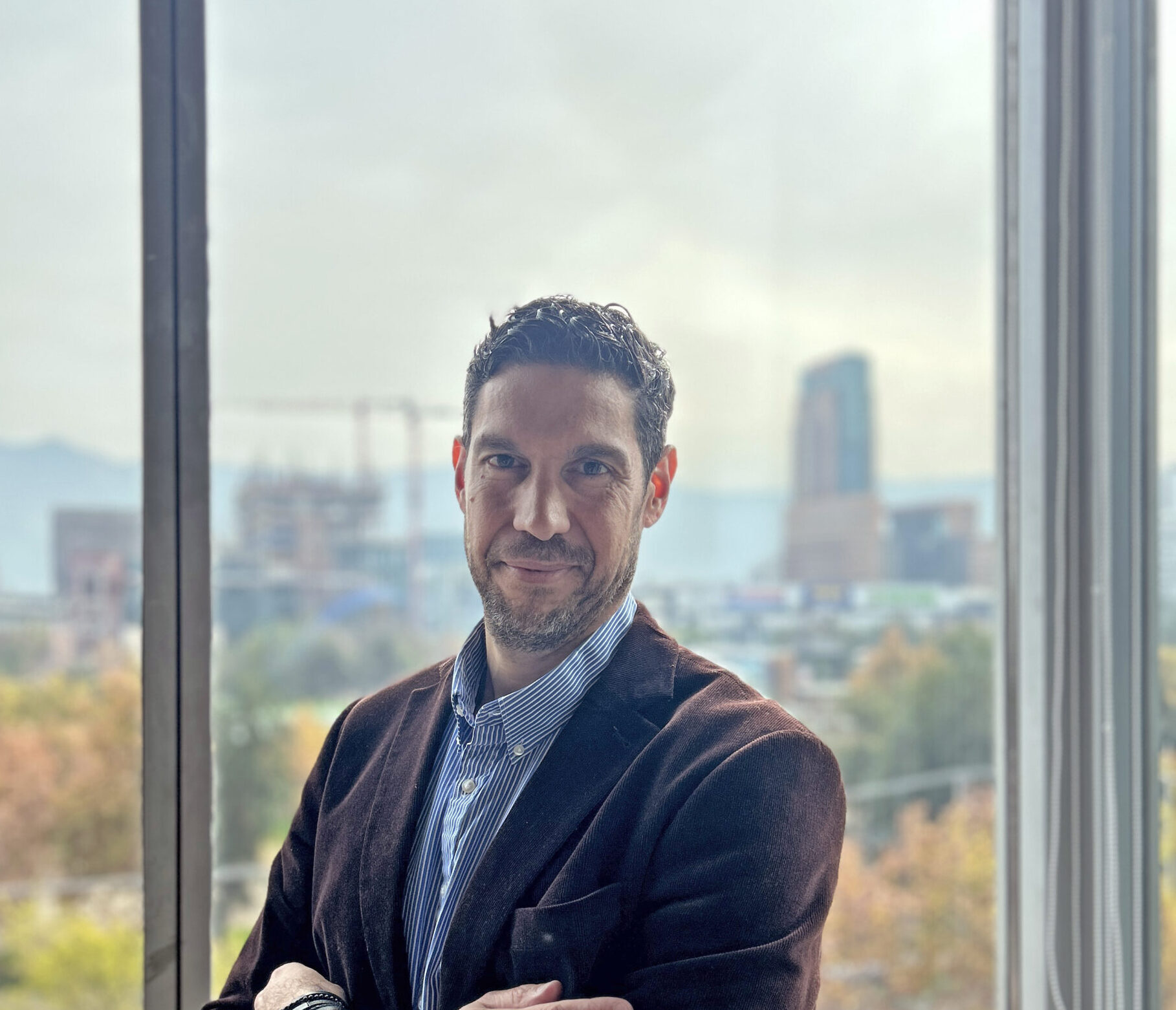
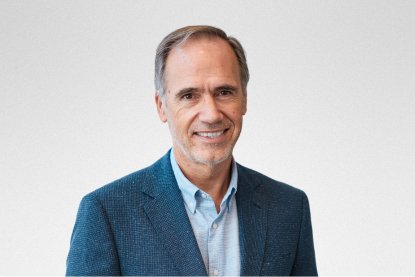
“Opportunities” is a word he repeats often. “Solid fundamentals” is another. Falabella’s president has been in the role for two and a half years. He took over during the retailer’s worst crisis, with several quarters of losses, debt that more than tripled its traditional ratios, and declining sales. That scenario is now behind them. The numbers improved quickly, and by September, profits had grown more than 170% to US$771 million, while revenues rose 9.4%. The NPS indicator —which measures customer satisfaction and loyalty— has increased across all businesses, he assures. Market confidence has also grown, with a 73% rise in the stock price, and new partners have acquired significant stakes, such as the Müller and Furst families. “That will surely bring changes to the board’s composition,” warns Enrique Ostalé ahead of the April renewal. On October 29, Falabella marked another milestone in its recovery: Fitch Ratings reinstated the investment grade it had withdrawn in 2023.
—Standard & Poor’s is still pending… “I have no doubt they will review the same information as the other agencies and will likely take similar action. What matters most are the future impacts; today, the foundations on which we are building these results are stronger, allowing us to seize every opportunity that arises.”
—What are those stronger foundations? “Focusing on core businesses and restoring their profitability; adjusting our e-commerce strategy with an emphasis on omnichannel; creating a simpler, more agile, and effective organization; and improving our return on invested capital, with a special focus on divesting non-essential assets.”
—Some critics claim you halted investment in digitalization and marketplace expansion, unlike the rest of the industry. Is that true? “When we joined the board, priorities were to restore business profitability and strengthen the company’s financial position. Every public company faces the tension of balancing short- and medium-term incentives. On one hand, we divested non-strategic assets to improve financial health; on the other, we have resumed strong investment in technology. By year-end, that figure will be 25% higher than the same period in 2024, considering that pre-pandemic we made a very significant technology investment that needed to be monetized.”
—Has that initial strategy ended? “Those challenges are ongoing, but judging by the results, we see significant progress. Today, Falabella has solid fundamentals to keep growing. The asset monetization plan is complete.”
—Sodimac’s business remains behind; you made changes. Is it the most challenging? “The construction industry has been slower to recover, and that impacts us, although Sodimac’s numbers have improved. Eduardo Mizón left the CEO role for personal reasons; he felt it was a good time for a change for himself and the company. We are focused on improving within the current context, but we are confident that at some point, the construction industry will recover —and we will benefit from that.”
—What opportunities does Falabella have? “We have many organic opportunities. Our focus is on the five businesses and the markets where we operate. Our financial business has great potential, not only in Chile but also in Peru, Colombia, and Mexico. With Sodimac, we are in Mexico and remain focused on growth there and on the development plan in Peru. Colombia continues to progress. We have a significant investment plan for Tottus Peru, and Mall Plaza also has an ambitious plan.”
—Are opportunities greater abroad than in Chile? “Chile is the most mature market, so opportunities here are mainly online. We are focused on improving our value proposition and becoming a relevant player —that’s where our main opportunities lie.”
—And inorganic growth? “Yes, if we believe it’s an attractive opportunity for Falabella. The company is generating significant cash flow, giving us the financial capacity to pursue all investment opportunities. We aim to maintain financial flexibility to consider growth possibilities as they arise.”
—Do Argentina’s improved prospects make you reconsider leaving? “No, our focus is on these four markets, plus operations we have in Brazil.”
‘We must advance toward a future labor agenda’
—As one of the country’s largest employers, how significant are the cost increases from new labor regulations?
“We’ve had to manage impacts, cost pressures, tariffs, artificial intelligence, etc. That reality becomes more pressing when growth is low. The key is not to complain but to act. Falabella Group employs around 40,000 people in Chile and 91,000 in the region. We believe we must advance toward a future labor agenda to create flexible jobs that offer more opportunities for workers and boost productivity. To achieve this, it is essential to embrace AI disruption decisively, adapt regulations, and foster a culture of collaboration among workers, companies, and the State.”
—Have these productivity gains affected hiring? “Yes. Despite growing sales, the company is leaner in terms of staff. There are automation processes, store productivity initiatives, artificial intelligence, etc.”
—How do you balance automation and customer experience? “That’s the big challenge. Our focus is an omnichannel strategy —reaching customers who interact in different ways with minimal friction. That includes in-store interaction, which is challenging because many people are involved, and productivity cannot come at the expense of service, as that ultimately impacts sales. We have a clear strategy depending on the business: Sodimac is a specialist and builds its value proposition on that expertise; at Falabella, the effort is on maintaining attractive, competitive collections that bring novelty.”
—What impact has the tariff war had on Falabella? “Our imports are mainly from Asia, where tariffs haven’t been an issue. There may have been strain on the supply chain due to the U.S. accelerating purchases, but everything normalized, and today our supply is running smoothly.” New shareholders: “That will surely bring changes.”
—How is today’s Falabella different from the one you joined?
“Falabella is now a simpler, more agile, and more effective organization, with a clear understanding of where to focus its energy. It is being more consistent in channeling that energy toward opportunities and what is relevant for its core business. And it is an organization that looks at growth options ahead with greater optimism and confidence.”
—Ownership has changed, with two new groups joining. How will that reflect on the new board that will emerge in April?
“There are investors who have made significant investments in the company, and that will surely bring changes to the board’s composition. But that is up to the shareholders; it’s hard to predict what those changes will be.”
—Would you like to continue?
“Today, my focus is 100% on completing my term and contributing as much as possible. I have no agenda regarding that.”
—Is there anything pending before April?
“Always. Complacency is the worst enemy. I am confident that what we have built allows us to look at the future with better expectations and greater confidence. But we still have many opportunities and ongoing challenges.”
—Do all shareholders share that vision?
“The fairest way to evaluate the board is by the actions it has taken, regardless of the different opinions, which are welcome because without challenge, value is not created. At least, I feel very satisfied with this board’s performance.”
Sidebar
“We must advance toward a future labor agenda to create flexible jobs that offer more opportunities for workers and boost productivity.”
“Government programs are not the same, but it is not our role to judge.”
—How much of Falabella’s recovery is due to better consumption data?
“There is talk of higher consumption and the impact of Argentine shoppers, but that only benefits Falabella’s physical stores. A large part of our sales come from Sodimac and other businesses. At the same time, the construction sector has been weaker. There is no major consumption boom; the figures reflect Falabella’s strengths and the team’s good work.”
—How do you project consumption?
“For Chile, we do not expect a very significant change in 2026.”
—Wouldn’t a new economic cycle emerge in light of a political shift?
“If we indeed face a more positive scenario, that will surely impact projections and figures, but that remains to be seen. The good news is that there is broad consensus that we need to drive stronger growth, above 2%. The challenge now is what actions to take, how to execute them, and how to be effective in creating an agenda that truly boosts growth.”
—How can that debate materialize?
“We are confident that regardless of who is elected, the importance of economic growth and its link to well-being has become firmly established. Also, the issue of security. We have good expectations that these will be priorities, creating more favorable conditions for business, which in turn generates confidence to invest and keep growing.”
—And does it not depend on which alternative wins in December?
“Government programs are not the same. What gives us confidence is that the issue is on the table and is a priority for everyone. We need to see what the action plan is, how it is executed, and how effective it is. Of course, there may be differences.”
—But both candidates already have their programs on the table.
“And they are not exactly the same, but it is not our role to judge.”
—What should be the top priorities?
“Streamlining permits, and creating an environment of trust in the rules of the game. Then, reactivating certain industries, such as construction, which also generates a lot of jobs. There have been no concrete actions to boost it. Also, attracting foreign investment again. As long as clear rules and more reasonable timelines are in place, investment will increase.”
Read the El Mercurio article here