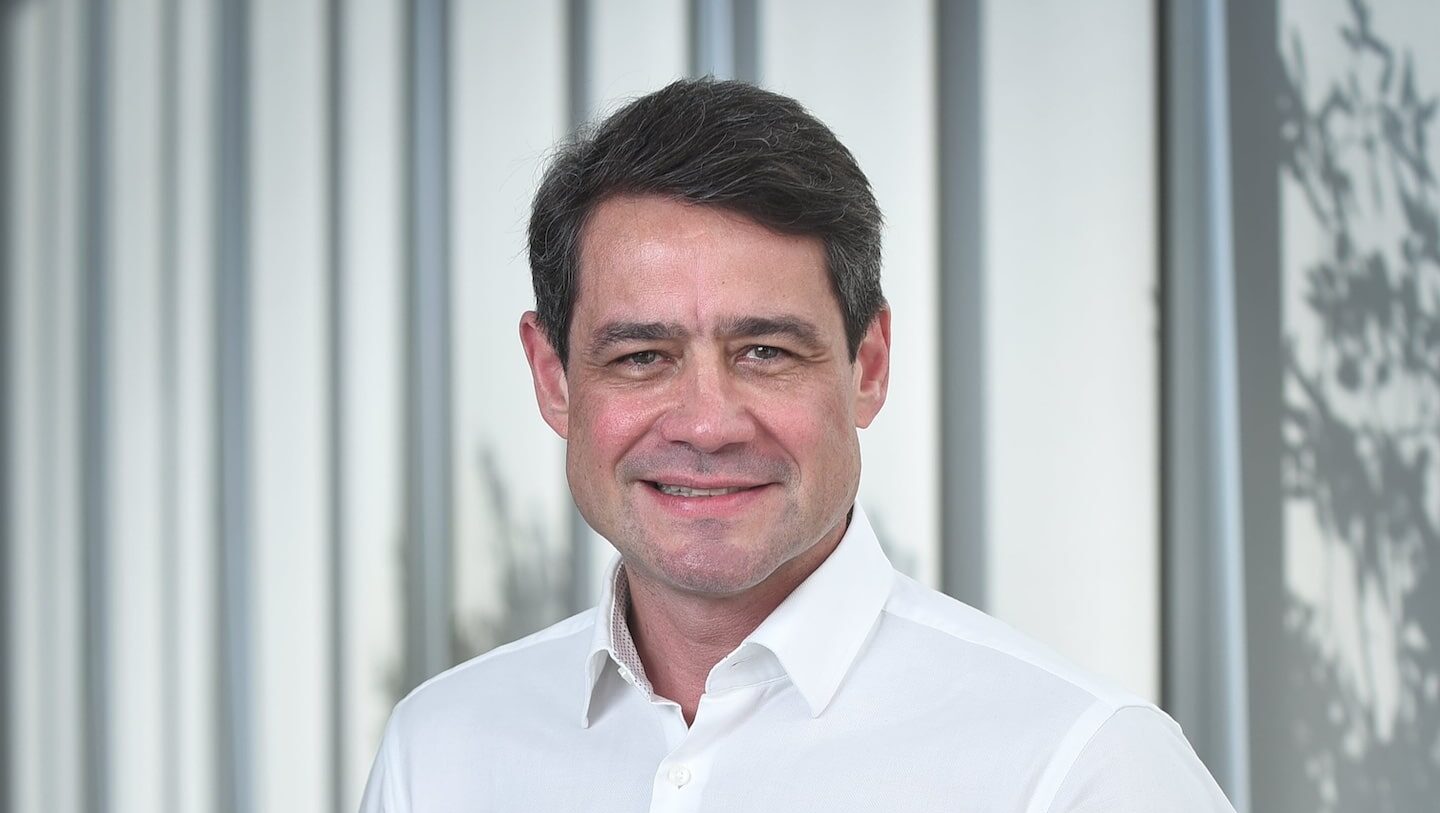
In his first interview since assuming the top position at this retail group, De Peña anticipates that they are “seeking investments.” He speaks of taking Falabella into a new stage of development, of “accelerating growth” and “bringing the speed the market demands” to this new phase. He says the focus is on the Andean region and specifically mentions Peru, “as an opportunity to increase our market share.” Regarding the company’s governance, and his role as a chairman of “unity,” he downplays any drama and reveals: “All decisions have been made unanimously.”
“I go almost every day. I have an office at Falabella and spend a large part of the day at the company. These first few months have been intense. At the same time, I have been able to maintain my other activities, although I am not directly involved in the management of any of them,” says Fernando De Peña Iver.
Since last March, this civil engineer has been chairman of Falabella, a position he assumed after serving for 35 years as CEO of Grupo Plaza, and the only person ever to hold that role, having taken it on literally when a group of partners was just developing a first mall in La Florida, which would become Plaza Vespucio. That is why his move this year to Falabella’s leadership, after stepping away from that executive career, came as no surprise. He knows Falabella’s shareholders well, as Falabella is the majority shareholder of Grupo Plaza, as well as the Müller and Fürst families, who have recently joined the parent company as shareholders after having long been historical partners solely in the shopping center business.
“This group is where I have developed most of my professional career. It is a project I am passionate about. So, when I received the invitation to chair its board, I accepted it with great enthusiasm. I am convinced that Falabella has enormous growth potential,” says De Peña in his first interview, conducted in writing, seven months after assuming the retailer’s top position.
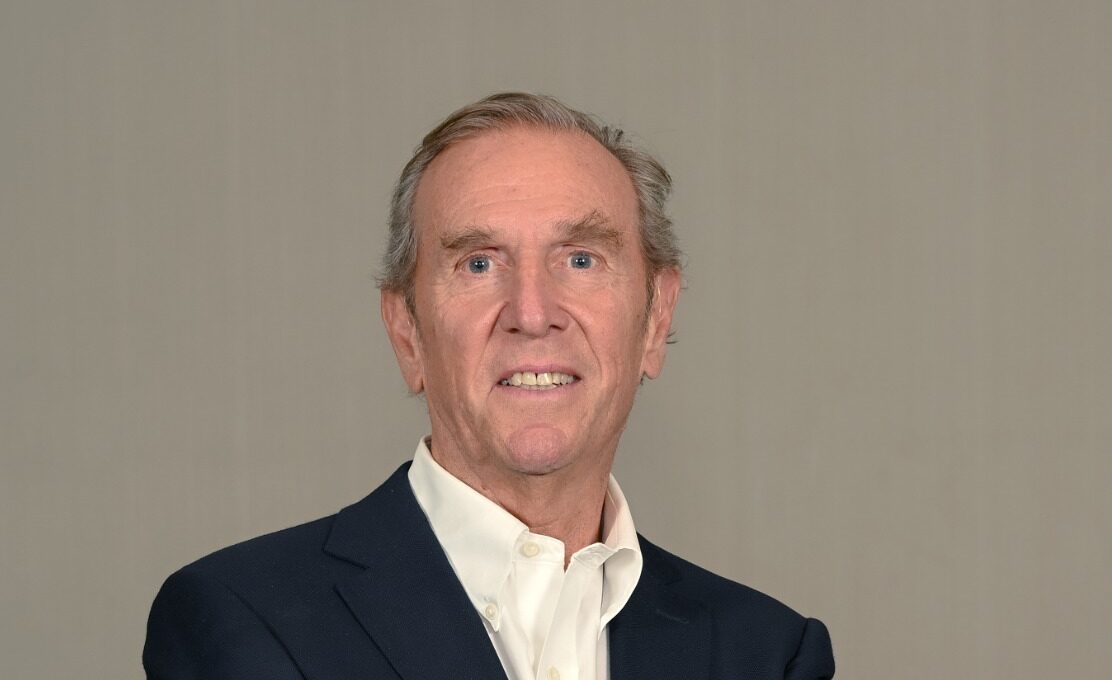
His appointment was driven through a letter from a company belonging to the Fürst family, which was supported by several shareholders: Piero and Sandro Solari, Sergio Cardone, Juan Cúneo, José Luis and Carolina Del Rio, Cecilia Karlezi, and siblings Francisca and Juan Carlos Cortés Solari. This brought to an end the three years during which Enrique Ostalé served as chairman of the group. The former strongman of Walmart Chile had been elected amid a highly turbulent period for Falabella, which had been hit by a massive post-pandemic downturn in its results, leading to disputes among shareholders and the end of the pact that had governed the company for years. Following these events, De Peña arrived as the candidate of “unity,” a role he has embraced.
“Indeed, I arrived after the end of the shareholders’ agreement, at a new stage of the company, with a board that shares a passion for the customer as the center of our activity and clearly sees the growth potential of this company. In addition, it is a board that believes in the value of a unique ecosystem in the region and is working together with management to bring the speed the market demands,” he says.
– Is it a burden to feel anointed as the unity candidate?
– Not at all. It is a tremendous enabler for safeguarding our strategy and accelerating growth. When there is a shared vision regarding the potential of a company like this, it creates an environment conducive to better decision-making, allowing us to move forward with focus, creativity, and agility, always keeping people at the center.
– What has being a chairman of unity translated into? Has your vote been the deciding one so far, or have decisions been unanimous?
– I have had the opportunity to chair a board with a strong collaborative spirit, one that shares the same strategy and ambition and in which all decisions have been made unanimously.
“taking the next leap”
– Why did you become excited about this project after closing a chapter at Mallplaza?
– The importance this company and its brands have in people’s lives is something truly inspiring. That excites me deeply. In addition, I find the challenge of taking Falabella into a new stage of development and growth fascinating because I see enormous potential, which the market is also recognizing. Today, my focus is on helping us fully develop that potential, at high speed, significantly strengthening our value proposition with people at the center.
– What kind of Falabella did you find upon your arrival? What is your assessment from an organizational and operational standpoint?
– Obviously, I have known the company for many years. For that reason, I was able to confirm more closely what I already knew. It is an ecosystem that places people at the center of its decision-making process, with a very strong personalized value proposition, leading businesses, a very strong financial position, and great credibility in the market. This is reflected in the recovery of its investment-grade rating, record operating results, and low debt levels. In addition, I have found teams with tremendous talent, commitment, creativity, and a strong desire to continue growing the company and innovating.
– You mention the investment-grade rating, record operating results, and low debt levels. Was much of the turnaround work already completed when you took office?
– Although Falabella achieved good results last year, the challenge we are driving now is to give the company greater speed and strengthen the synergies among its different businesses. We have designed a clear and shared growth strategy centered on the customer, allowing us to maximize the advantages of our ecosystem. This is what will enable us to take the next leap.
– What have you dedicated these first months as chairman to?
– I have been focused on enabling growth by simplifying and professionalizing the corporate governance of our businesses, adapting our structures to increase agility, and leading the design of a shared growth strategy looking toward 2030. We are working very closely with management to drive these changes, many of which are already being reflected.
– Since your arrival, organizational changes have taken place at Falabella, including a major change in the composition of subsidiary boards. What was the diagnosis? Too many shareholders sitting on those boards?
– The governance of our businesses was simplified and professionalized, increasing the frequency of board meetings and granting greater accountability to each of the general managers.
– How would you define the stage Falabella is currently in?
– We are in an optimal position to grow. We have solid businesses, a very healthy financial position, experienced teams, and a value proposition that differentiates us in the region and allows us to capture new growth opportunities. We have a unique ecosystem in the region, one that is very difficult to replicate, based on the complementarity of our businesses, brands, and significant international presence, which generates synergies.
“We are seeking investments”
After years without significant M&A activity, Falabella Group announced two deals in the region in October alone. One was the acquisition of a majority stake in Colombian technical supplies distributor Sumatec, within the Sodimac division, which expanded its reach particularly in the business-to-business segment. Also in Colombia, together with Grupo Plaza, it completed the acquisition of eight Gran Plaza shopping centers from real estate fund Pactia.
– Is this the right time for Falabella to resume regional expansion and acquisitions more aggressively?
– We are in a financial position that allows us to evaluate new opportunities. As part of our growth plan, we are seeking investments that strengthen our businesses, complement our capabilities, and generate greater value for our customers and shareholders. Recent transactions are a reflection of this.
– Does the political cycle in various countries across the region, such as Colombia and Peru, with a more pro-investment orientation, accelerate those plans?
– An environment that encourages investment and provides clear rules will always be positive, and we are agilely analyzing how we can take advantage of the opportunities that arise.
– Are there geographic markets where you see potential for Falabella to enter, or to add new business units in markets where it already operates but where not all business verticals are yet present?
– We are constantly evaluating our maximum potential in every market where we operate, taking into account the specific characteristics of its consumers. We do not necessarily need to replicate the same model in every market. Today, our focus is on the markets where we already have a presence, especially the Andean region.
– Where do you see the greatest growth opportunities, and in which formats?
– We see Peru as an opportunity to increase our market share, as it is a dynamic economy that still has relatively low formal retail penetration compared to Chile, for example. There we have our entire ecosystem deployed, and we believe we have room to continue growing. In addition, we see significant potential in the digital channel. Last year we grew 27% through that channel, and we need to continue strengthening it.
– Under that logic, what is your assessment of your presence in Brazil? Is it appropriate to continue pursuing a business that has not delivered scale or results? Will you exit Brazil?
– We are continuously evaluating the opportunities the market offers us.
– Is returning to Argentina with stores part of the plan?
– We have not evaluated it.
– Is the United States on the radar?
– As I have said, our priority is to grow in the markets where we already have a presence.
– You recently announced a new agreement with Mallplaza for that unit to control assets currently owned by Falabella Inmobiliario in Chile. What are the advantages and value-creation opportunities for Falabella from this change?
– Our intention is for each business to focus on what it does best, leveraging its specialization. Mallplaza has a widely recognized track record in the development and management of shopping centers. This reorganization seeks to simplify structures, enhance asset management and development, and accelerate profitability. It is a good example of how we can generate more value by leveraging the strengths we already have.
– Is Falabella looking to grow its supermarket business in Chile or other countries, a segment traditionally considered more defensive during times of crisis? Is the discount format an option that interests you?
– We are growing with Precio Uno in Peru. And in Chile, Tottus has been strengthening its commercial proposition and profitability with very positive results. We see growth through the digital channel, where we are growing faster than the market.
“Retail is becoming more active every day”
– What is your view on the future of physical retail, stores, and shopping malls? Is there room to continue growing square footage in Chile and across the region?
– There is no single answer. Stores and shopping centers continue to play a fundamental role, but their value proposition is evolving alongside consumer habits. Today, physical spaces are places for experiences, social interaction, and services, and they are also integrated with digital channels, driving synergies and providing our customers with an omnichannel proposition.
– For years people spoke of the retail apocalypse. Do you agree?
– Not at all. Retail is becoming more active and present in people’s lives every day. What we have seen is a transformation in the way consumers interact with retail. People continue to value the experience of stores and shopping centers while also demanding a very strong online offering. What is important to us is giving them the opportunity to be the architect of their own experience.
– What is your aspiration and outlook regarding online sales and their penetration within the group?
– As of the second quarter, our online sales accounted for 27.6% of total sales, and our aspiration is to continue growing and gaining market share. However, success should not be measured by how much online represents of the total, but rather by our ability to provide a better omnichannel experience that is personalized, integrated, profitable, and convenient for the customer.
– How do you view consumer spending in Chile in a context of very unfavorable economic indicators? How will Falabella navigate this environment?
– Consumption continues to face a very challenging environment, and it is important to remain cautious regarding its evolution. However, our growth strategy does not depend exclusively on an economic recovery. In fact, as a group, we have demonstrated strong resilience through economic cycles, posting record profits even during periods when the economy has not performed well. That is where the strength of our ecosystem lies: in the synergies among our businesses, the complementarity of the products and services our customers prefer, and our connection with them.
– What boost to the group’s investment plans does the recently enacted Reconstruction Law provide, particularly in terms of increasing capex and future projects?
– We value initiatives that promote investment, productivity, and economic growth because they create better conditions for companies to develop their projects. But, as I mentioned, our investment decisions respond primarily to a long-term strategy and to the opportunities we identify in the markets where we operate.
– Will the 2027 growth plan be larger than the US$900 million planned for 2026? Will there be different priorities for 2027?
– We are currently working on the 2027 investment plan, which we expect to communicate soon. But I can already say that it will be aligned with our growth strategy.
“I SEE A SOLID COMPANY, A COMMITTED BOARD”
The difficult period Falabella experienced in the recent past resulted in Carlo Solari stepping down as chairman in April 2023. Then, in January 2024, its then-CEO Gaston Bottazzini left the position amid poor results. Later, during Enrique Ostalé’s tenure, the numbers began to improve again for the group, which posted profits of US$1.485 billion at the close of 2025.
However, conflicting views remain, with some voices pointing out that during the period of Gaston Bottazzini and Carlo Solari, investments were made in long-term technological capabilities, and that a different phase later followed in which physical assets were once again prioritized and dividends distributed.
– What comes next? What do you represent? A return to investing in technology? Or continuing to prioritize physical presence?
– A company with 137 years of history goes through different stages and evolves. Falabella has demonstrated its enormous capacity for resilience and innovation. My focus is on the future and on the tremendous growth opportunities that lie ahead. The company has been delivering record results and is in an optimal position. In fact, just a few days ago, its share price reached an all-time high. This company has a unique omnichannel value proposition that integrates physical stores, digital platforms, financial services, and shopping centers, with technology serving as a cross-functional enabler that connects all our businesses. That is why we allocate a significant portion of our investments to this area. There is no trade-off between physical and digital; rather, there is tremendous complementarity. Our main strength lies in our ability to integrate and enhance both worlds.
– How do you govern a company without a clear controlling shareholder, with dispersed ownership and with new families, such as the Fürst and Müller families, recently incorporated?
– The same way any publicly traded company without a controlling shareholder and with a promising future is governed: with a board that represents the interests of all shareholders, clear rules, and a highly professional management team.
– Would it be desirable to re-establish an agreement or joint-action pact?
– That is a decision that rests exclusively with the shareholders. From the chairmanship of the board, our responsibility is to safeguard the interests of the company and all its shareholders.
– Is Falabella still a company affected by the conflict among its shareholders?
– I see a solid company, a committed board, and a management team focused on executing our growth strategy at high speed.
– What is your measure of success as chairman of Falabella, at least during the first three years of your tenure? What are your goals?
– I aspire for Falabella to become a company that is increasingly loved and valued by its customers, employees, neighbors, and investors. With a clear growth plan that is executed with excellence and at high speed.
– And what concrete metrics does that translate into?
– We currently serve close to 39 million customers across the seven countries in which we operate. In the Andean region, one out of every two adults is our customer. The way to measure success is through customer preference. And if that happens, the market will prefer us as well.
– Is your commitment only for three years, or would you continue for another term if asked?
– My commitment is to Falabella’s development and to the challenges ahead of us. Today, I am fully focused on driving our strategy and helping the company achieve its full potential.
Article by Diario Financiero